Recovery Bouldering
Six week course
-
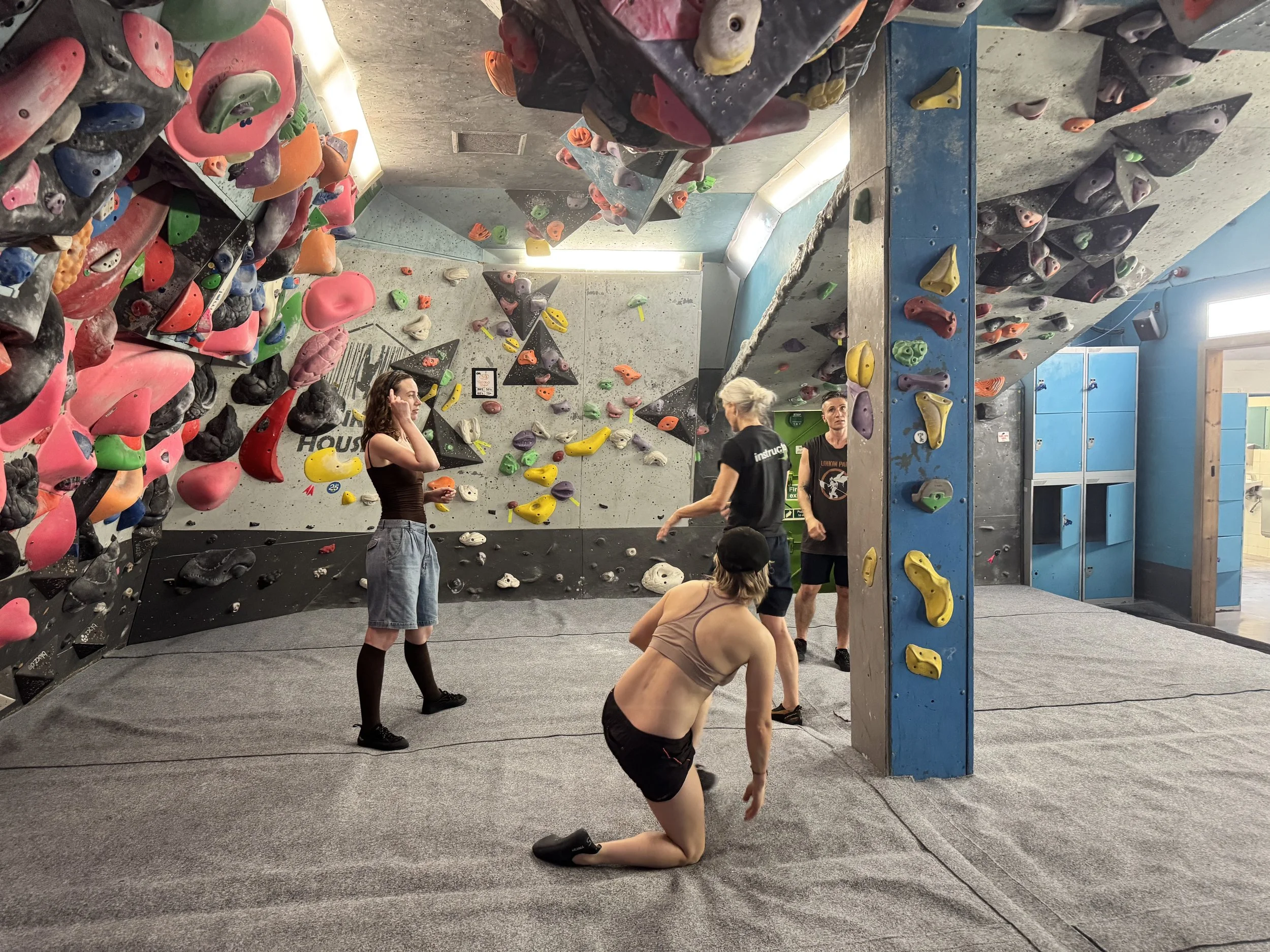
Workshop participants ease into the session, Elise will provide everyone with a complimentary cup of tea. This is your time to arrive into the space, get changed if you need to & put your valuables into a locker.
-
A slow warm up led by Stephanie to get the body loosened & stretched ready to hit the wall.
-
Participants will be able to start using the climbing wall. Stephanie is on hand for tips & tricks.
-
At the end of every session, the Mile End Climbing wall provides a complimentary lunch to all participants that would like to stay for lunch. No pressure, if you need to leave at 1:30pm, we look forward to seeing you the next week.
-
If you stayed for lunch, you might have got caught up in a chat with some of the other participants. Elise & Stephanie stay for lunch & can answer any questions you might have, its a great opportunity to debrief & share your experience of the climb.
Meet your Instructor & Peer Support Lead
Always here to help
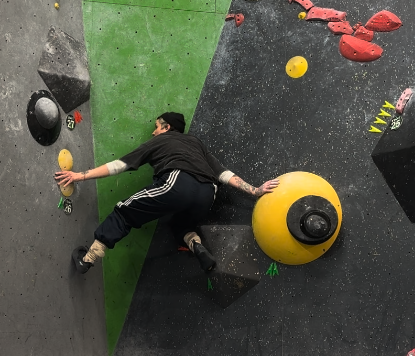
elise harrison
Peer Support Lead
Elise came up with the concept of The Recovery Community in 2026, she lived with undiagnosed ADHD & Autism until she got her diagnosis in 2022 & 2024. She lived using alcohol for 22 years to cope with social anxiety & overwhelm. When she was too anxious to leave the house, she discovered alcohol made isolation bearable.
This relationship with alcohol soon turned into an abusive one, involving risk taking behaviours, ending up in dangerous situations where others could take advantage. Elise ended up using drugs to control her drinking, she would use MDMA or Cocaine to stop herself from blacking out on alcohol, it was a messy life of trying to feel okay in social situations.
This pattern of survival almost cost her life, ending with a stint in rehab in May 2024. During her time at rehab, she realised that it was the social aspect that was the main drive to ending up on this spiral of using & wanted to create an alternative way for neurodivergent people to hang out & build community. This involved creating socials that remove the need to drink or drug, that have an activity as the main focus & create the conditions for gentle & slow bonding where the pressure of sitting across from someone at a pub or bar is removed.
Here she is 2.5 years sober settling up The Recovery Community so that others can benefit from her route to recovery.
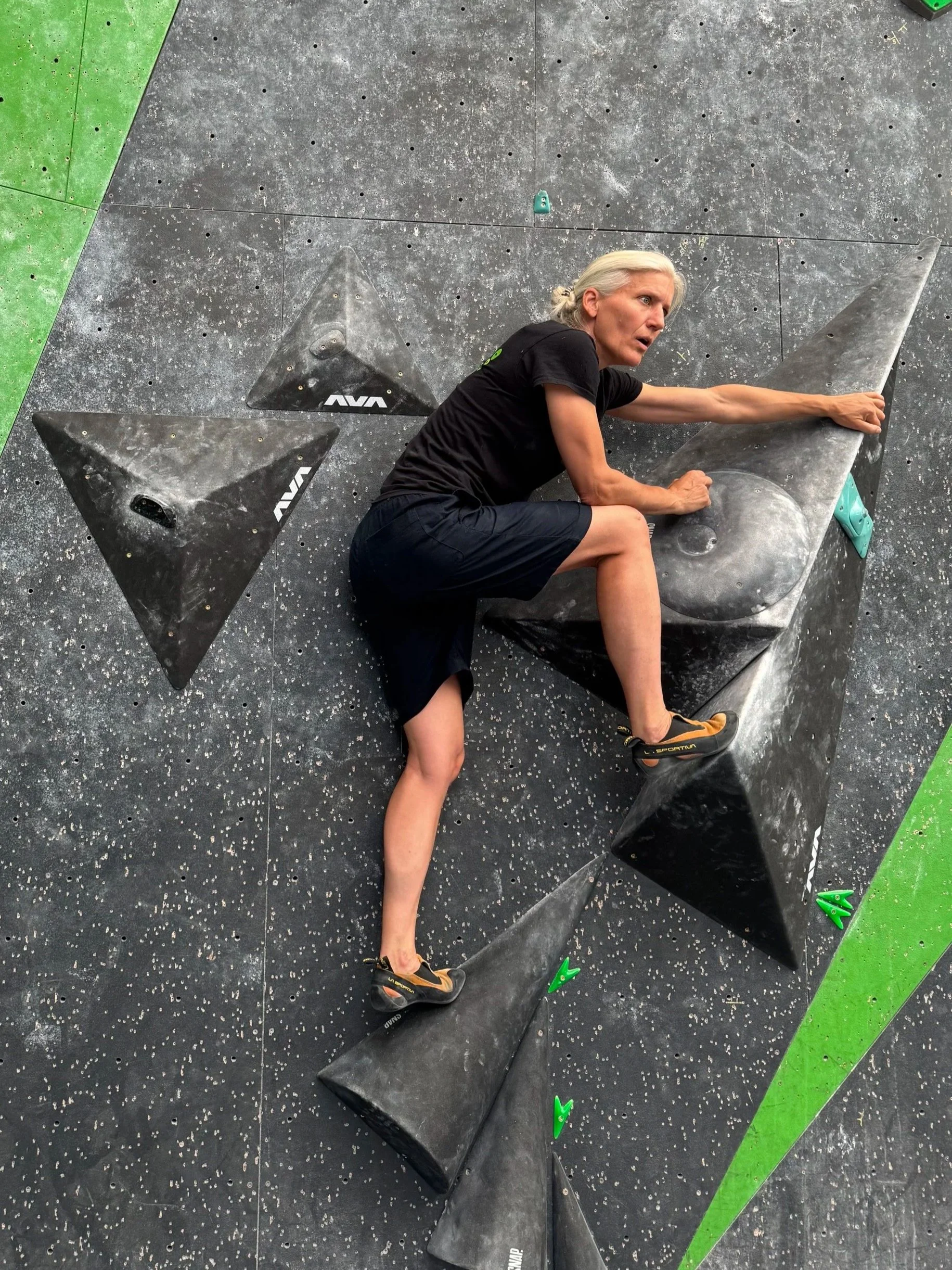
Stephanie westrum
Climbing Instructor
Stephanie was diagnosed with autism in 2020 and ADHD in 2021. Although very few people would have noticed, she always felt like an outsider, struggling to fit into social as well as professional environments.
Although she does not have a history of addiction, she shows tendencies to extreme behaviours, leading her into negative behavioural patterns and potentially dangerous situations in the past. Social anxiety and awkwardness still create situations of deep discomfort and alienation. Discovering climbing in her mid-thirties felt like a life saver. The movement, joy, exhilaration, the positive exertion, the variety of challenges, as well as the ease of the climbing community.
Originally trained as an Architect, Stephanie subsequently completed an MSc in Positive Psychology and Coaching Psychology. She is a certified climbing instructor. She is currently working at Mile End Climbing Wall and as a life coach, with an emphasis on embodied coaching - combining her coaching training, climbing, movement, being in nature, and her experience and knowledge as a neurodivergent individual.
Stephanie also has training as a somatic movement coach & has always been interested in the power of healing trauma or regulating your emotions through movement. She introduces some somatic movement in her warm up sessions at the start of the class.
She looks forward to welcoming you to the course & sharing her passion for climbing with you.
Want to volunteer?
Peer Support
Do you have lived experience of using alcohol or drugs to cope with your ADHD or Autism? We are always looking for people who want a commitment alongside their recovery, whether it’s welcoming people to the centre. Helping people fill out the forms when it’s their first time & being present during the Recovery Bouldering Drop-in sessions as a Peer Mentor. This route can lead to paid Peer Support work through The Recovery Community.
If you feel The Recovery Community is your community, then we would love to hear from you. Contact us to express interest.